

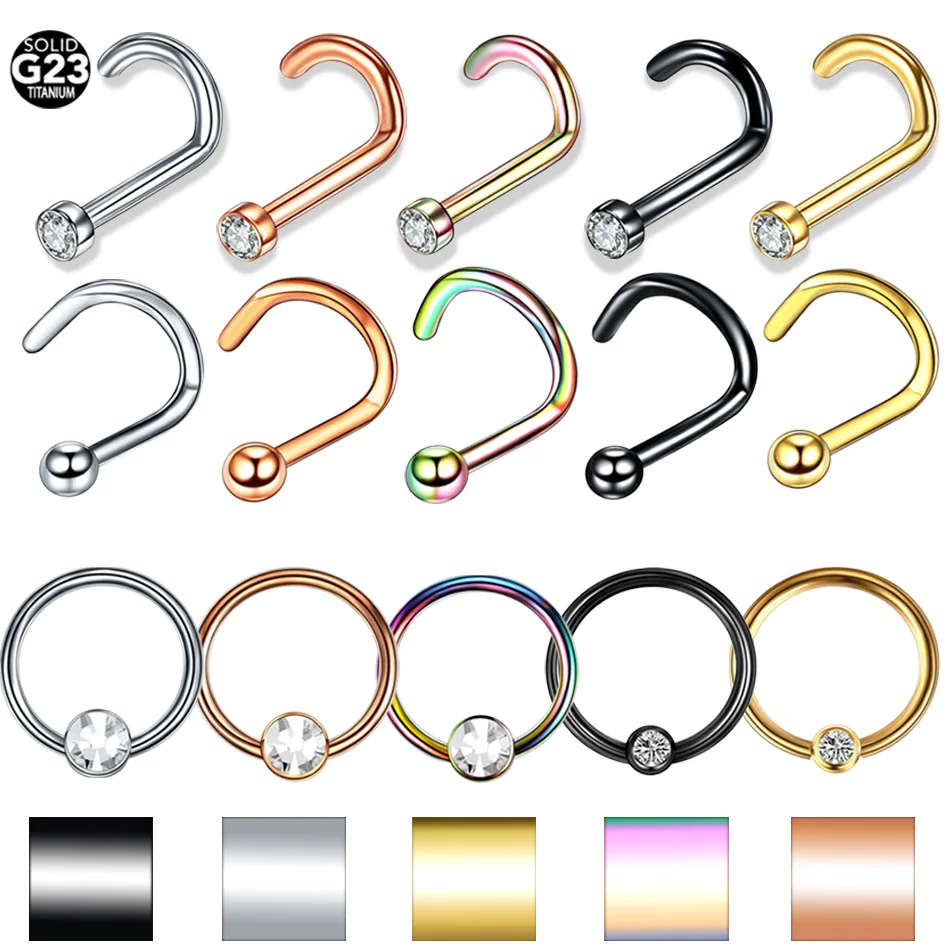
Titanium nose rings are a small product category on paper, but they often become a high-frequency reorder item for piercing studios, distributors, and wholesale body jewelry buyers. Nose jewelry sits at the meeting point of everyday wear, visible styling, and practical studio demand. A buyer who builds this category carefully can create a range that is easy to explain, easy to merchandise, and easier to replenish across seasons.
At PSS, we see titanium nose jewelry as part of a broader professional supply system rather than a single fashion SKU. The goal is not only to select attractive pieces. It is to build a dependable assortment with clear material positioning, stable sizing, repeatable finishes, and enough variety for studios and resellers to keep selling without making every reorder complicated.
Why Titanium Nose Rings Deserve Their Own Buying Plan
Many buyers add nose rings as an afterthought beside labrets, barbells, or belly rings. That approach can work for a first test order, but it usually leaves gaps. Nose jewelry has its own selling logic. Buyers need to think about hoop styles, nostril screws, L-shaped posts, studs, decorative tops, gauge options, diameter, finish colors, and packaging presentation. If these details are not planned, the collection may look broad but still fail to cover the styles studios reorder most often.
A stronger approach is to treat titanium nose rings as a focused sub-category within a professional titanium range. That makes it easier to decide which SKUs should be basic stock, which should be seasonal, and which should be reserved for private-label or promotional collections.
Start With Material Clarity Before Choosing Designs
For professional buyers, the material description should be clear before price comparison begins. Titanium nose rings are often marketed with overlapping terms such as titanium, G23 titanium, implant-grade titanium, or ASTM-F136 titanium. These labels are not always used with the same level of precision across suppliers. Buyers should ask how the material is described on product pages, invoices, packaging, and specification sheets, especially when the range will be sold to studios or under a private label.
This does not mean every order must be the most expensive option. It means the product line should be understandable. A distributor selling a professional titanium collection needs cleaner product language than a general fashion seller. Clear material positioning also helps buyers connect nose rings with the larger ASTM-F136 titanium piercing jewelry category instead of treating them as isolated accessories.
Choose Shapes Around Real Studio Reorders
A balanced nose ring wholesale range normally needs several product roles. Basic hoops and captive-style looks give the collection its everyday foundation. Studs with small stones or simple balls support clean retail presentation. Nostril screws and L-shaped styles help cover common customer preferences. Decorative designs can then add visual interest without forcing the buyer to overstock slow-moving pieces.
The most useful assortment is not always the largest one. For a studio, too many near-identical designs can create inventory confusion. For a distributor, too many finish and size combinations can make replenishment harder. A better starting set is usually a compact core range: silver tone, gold tone, rose gold tone, black, and a limited number of rainbow or colored finishes, supported by the most practical gauges and diameters for the buyer’s market.
Check Finish Consistency and Stone Setting Details
Nose jewelry is small, so minor quality differences become visible quickly in product photography and retail display. Buyers should inspect the smoothness of curved sections, the shape of the wearable area, color consistency across batches, stone setting alignment, and whether decorative ends look centered and clean. For plated or PVD-colored titanium styles, the finish should be evaluated as part of the purchasing decision, not as an afterthought.
Stone-set nose rings need extra attention. The stone should sit neatly, the bezel or prong work should look consistent, and the product should not feel rough around the setting. A buyer sourcing for studios should also check how the supplier handles replacement, repeat orders, and discontinued colors. The issue is not only whether one sample looks acceptable. The real question is whether the same standard can be repeated when the buyer places a second or third order.
Connect Nose Rings With Labrets and Wider Titanium Ranges
Nose rings perform better in a wholesale catalog when they sit beside related titanium products. A buyer can build a stronger purchasing story by grouping them with titanium threadless labrets, titanium studs, hoops, and other core styles. This makes it easier for studios to buy across placements while keeping the material story consistent.
If you are still building the foundation of a titanium range, it is worth reviewing how titanium labrets fit into a studio collection and how professional buyers compare titanium vs 316L piercing jewelry. Nose rings often sell best when the buyer’s total catalog has a clear material ladder: titanium for professional core styles, 316L for broad commercial assortment, and gold or silver for premium or giftable ranges.
What Wholesale Buyers Should Ask Before Ordering
Before placing a bulk order, buyers should ask for exact product specifications. Useful questions include: What gauge and diameter options are available? Which finishes can be reordered reliably? Can the same stone size and setting be maintained in future batches? Are matching product photos available for catalog use? Can the supplier support barcode labels, custom cards, or other private-label packaging if the buyer needs it?
For distributors and private-label brands, the packaging question can be just as important as the product itself. Small jewelry needs clear organization. A clean label system by material, gauge, size, and finish can reduce warehouse mistakes and make sales teams more confident. For studios, organized packaging makes it easier to present jewelry to clients and manage replenishment without mixing similar-looking sizes.
Build the Category for Long-Term Replenishment
The strongest titanium nose ring wholesale range should be built for replenishment, not only for first-order variety. Buyers should separate core SKUs from experimental designs, track which finishes reorder fastest, and keep their supplier informed when a size or style becomes a dependable seller. This turns the category from a loose product group into a managed inventory system.
PSS supports professional buyers with factory-backed piercing jewelry supply, titanium category planning, and OEM/ODM cooperation for long-term wholesale programs. If you are developing a titanium nose jewelry range for studios, distribution, or private-label retail, you can browse the PSS wholesale piercing jewelry shop or contact us with your target styles, materials, finishes, and quantity plan.
