

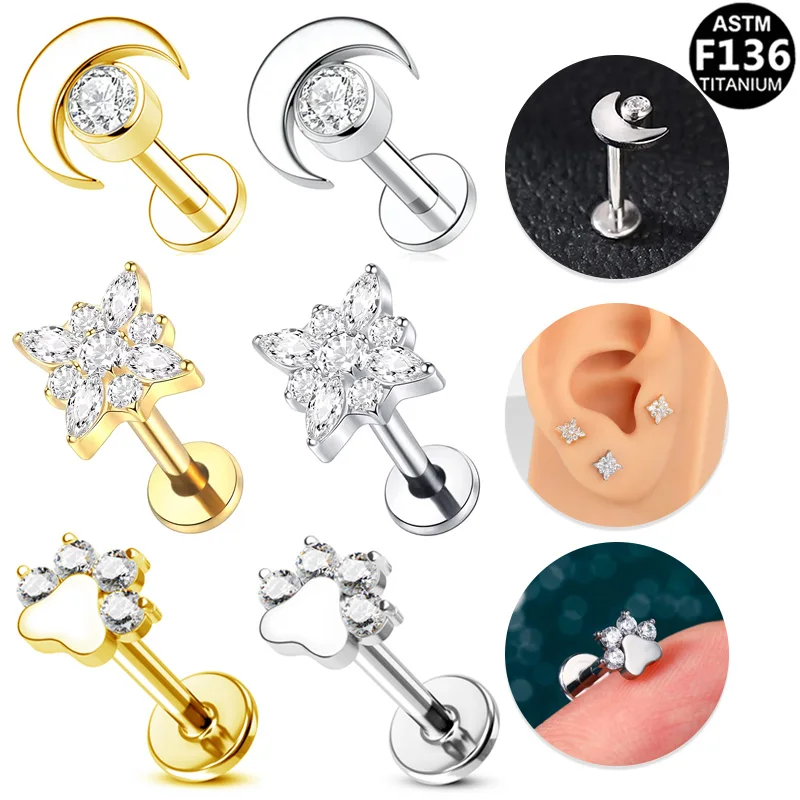
For professional piercing studios and wholesale buyers, labrets are not just another small SKU group. They are one of the most repeatable parts of a body jewelry assortment because they can serve lip, helix, flat, tragus, conch, and other cartilage placements depending on sizing and design. When the material is ASTM-F136 titanium, a labret collection can also support a more professional buying story: lightweight wear, corrosion resistance, clean finishing, and a stronger material position for long-term studio supply.
PSS works with B2B buyers who need piercing jewelry ranges that can be reordered consistently, not only attractive samples for one catalog launch. This guide explains how studios, distributors, and private-label buyers can build a titanium labret wholesale collection that is practical, sellable, and easier to manage over time.
Start With the Role Labrets Play in a Studio Assortment
A strong labret range usually works as the daily core of a studio jewelry case. It should include simple polished ends, clear stone pieces, small decorative motifs, and a limited number of statement designs. Buyers often make the mistake of selecting too many visual styles before confirming the practical foundation: gauge, post length, disk size, top compatibility, and finish consistency.
For most professional buyers, the first goal is not to carry every possible labret design. The first goal is to create a range that staff can recommend easily, customers can understand quickly, and purchasing teams can reorder without confusion. This is why a focused titanium threadless labret category is useful: it gives the buyer a clear base for repeat sales and future style expansion.
Choose ASTM-F136 Titanium for the Professional Core
ASTM-F136 titanium is widely chosen by professional buyers because it gives the category a more reliable material foundation than low-cost mixed-metal alternatives. For B2B sourcing, the value is not only the material label. The value is how that material supports a stable, higher-confidence product range for studios and resellers.
A titanium labret collection should sit inside a broader material strategy. Buyers can use ASTM-F136 titanium piercing jewelry as the professional core, keep 316L piercing jewelry for commercial volume styles, and reserve gold or silver lines for premium or giftable collections. This makes the catalog easier to explain to studios, retail partners, and online shoppers.
Plan Sizes Before You Plan Decorative Tops
Labret buyers should confirm the size system before adding too many designs. A practical assortment normally considers gauge, post length, disk diameter, top size, stone setting, and whether the design is threadless, internally threaded, or another construction. Without a clear size plan, the catalog becomes difficult to manage and reorder accuracy drops.
For distributors, size discipline matters even more. Your customers may be studios with different piercing preferences and regional habits. A clean product matrix helps your sales team quote faster, helps warehouse staff reduce picking errors, and helps repeat customers order the same item again. The most useful supplier is one that can keep these specifications clear across product pages, invoices, samples, and future bulk orders.
Build a Balanced Style Ladder
A reorderable titanium labret collection usually needs four layers. The first layer is clean basics: plain balls, disks, bezel-set stones, and small polished tops. The second layer is commercial decoration: opal-look styles, cubic zirconia settings, stars, moons, hearts, and floral shapes. The third layer is premium-looking detail, such as refined multi-stone clusters or more delicate settings. The fourth layer is seasonal or trend-led design, which should be tested carefully before large-volume buying.
This structure prevents the collection from becoming either too plain or too risky. Basics support daily studio demand. Decorative pieces improve average order value. Premium-looking pieces create a better showcase. Trend-led items give buyers freshness without forcing the whole catalog to depend on short-term taste.
Check Finish, Setting, and Repeat Production
When comparing titanium labret suppliers, buyers should look beyond the first product photo. Check whether the polish is smooth and consistent, whether stones sit evenly, whether disks and posts feel properly finished, and whether the color or PVD finish is stable across a group of samples. These checks are especially important when the jewelry will be sold under a private label or used by professional studios that expect repeat consistency.
Repeat production is where many sourcing problems appear. A sample may look strong, but the second batch may vary in finish, stone color, sizing, or packaging. Before committing to a larger titanium labret wholesale program, buyers should ask how the supplier controls specifications, how repeat SKUs are organized, and whether the supplier can support steady replenishment instead of only one-off production.
Connect Labrets With Nearby Product Categories
Labrets often sell best when they are planned with adjacent titanium categories. A buyer sourcing labrets may also need titanium nose rings, titanium barbells, septum clickers, and cartilage earrings. Keeping these categories connected helps studios build coordinated cases and helps distributors present a more complete titanium program.
Internal product planning also supports SEO and conversion. A product page that shows labrets as part of a larger titanium range gives buyers more reasons to stay on the site, compare options, and send a clearer inquiry. For context, buyers can also review our earlier guide on ASTM-F136 titanium piercing jewelry for wholesale buyers and our comparison of titanium vs 316L piercing jewelry.
Use OEM and ODM Carefully
Private-label buyers often want exclusive labret tops, special stone combinations, or branded packaging. OEM and ODM can be valuable, but it works best after the buyer has a clear core range. If the basic titanium labret system is not stable, custom development can add cost and complexity before the buyer knows what sells.
A practical approach is to begin with proven titanium labret structures, test decorative directions, then develop custom details once reorder demand is visible. This gives the buyer more control and gives the factory a clearer target for samples, production standards, and packaging requirements.
Source for Long-Term Reorders
The best titanium labret collection is not the largest collection. It is the one that your team can sell, explain, replenish, and expand. For studios, that means jewelry staff can recommend confidently. For distributors, it means repeat customers can reorder with fewer mistakes. For private-label brands, it means the material story, style direction, and supply chain all work together.
If you are planning a titanium labret wholesale range for your studio, store, or distribution business, PSS can help you organize core styles, material categories, and OEM/ODM development around long-term supply. Browse our wholesale piercing jewelry shop or contact us with your target material, style direction, and order plan.

2 thoughts on “How to Build a Reliable Titanium Labret Collection for Studios”