Blog
Titanium vs 316L Piercing Jewelry: How Professional Buyers Choose

For professional piercing studios, distributors, and private-label jewelry brands, the titanium vs 316L piercing jewelry decision is rarely about choosing one material forever. It is usually about building the right assortment for the right customer, price point, and reorder cycle. A studio may need ASTM-F136 titanium for premium long-wear basics, while a distributor may still need 316L stainless steel for broad commercial designs, seasonal collections, and entry-level bulk ranges.
Piercing Studio Supply works with B2B buyers who need both material clarity and stable replenishment. This guide explains how to compare titanium and 316L from a purchasing perspective, without turning the decision into a simple “good versus bad” answer.
Start with the buyer segment, not only the material
Before comparing alloys, define who will buy the finished range. A professional piercing studio usually cares about trust, repeatable sizing, simple sterilization workflow, and jewelry that can stay in the display case as a dependable core item. A distributor may care more about SKU depth, price ladder, fast-moving styles, and packaging flexibility. A private-label brand may need consistent finishing, sampling support, and the ability to develop matching collections over time.
This is why many successful B2B ranges use more than one material category. ASTM-F136 titanium piercing jewelry can anchor the professional and premium part of the assortment. 316L piercing jewelry can support wider design coverage and more accessible bulk pricing. The commercial question is not which material sounds better in isolation, but where each one creates the strongest margin and lowest sourcing risk.
Where ASTM-F136 titanium usually fits best
ASTM-F136 titanium is widely used by professional buyers because it is lightweight, corrosion resistant, and strongly associated with higher-end piercing jewelry assortments. For studios, titanium is often easier to position as a serious upgrade from generic fashion jewelry. For wholesalers, it helps create a premium tier with cleaner material messaging and better long-term replenishment potential.
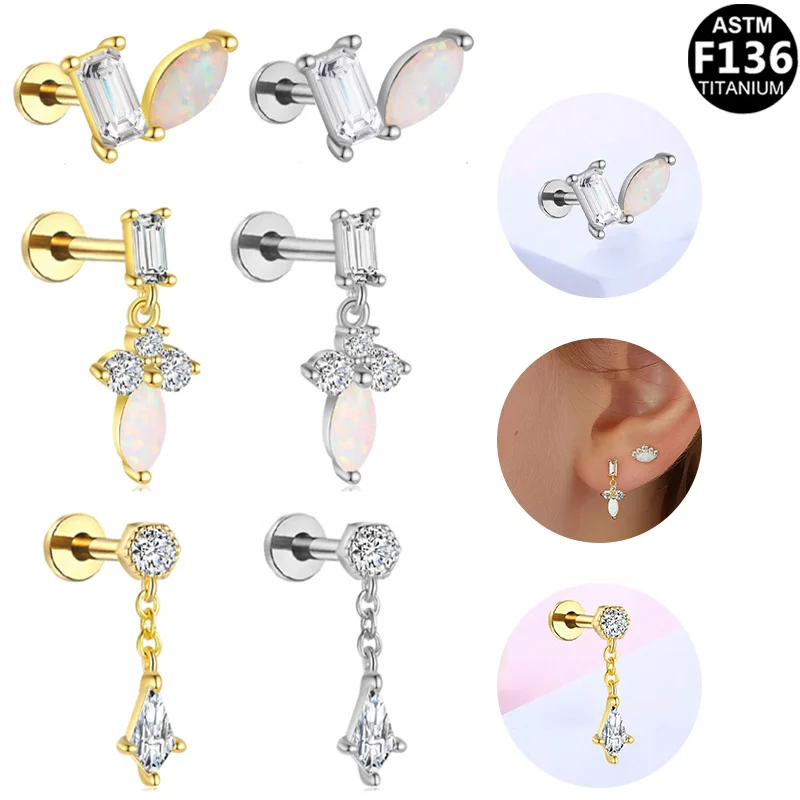
Common titanium-led categories include threadless labrets, flat-back studs, nose jewelry, barbells, belly rings, and septum clickers. These are products where sizing consistency, surface finish, and repeat orders matter more than chasing the lowest possible unit price. If your customers are professional studios or higher-end retailers, titanium basics can become the range they reorder every month rather than a one-time trend purchase.
There is also a merchandising advantage. Titanium jewelry is easier to organize around core gauges, lengths, ball sizes, gem colors, and attachment styles. A buyer can build a clean starter assortment, test sales in several locations, and then expand into more designs once the reorder data is clear. For a deeper material overview, see our previous guide: ASTM-F136 Titanium Piercing Jewelry: What Wholesale Buyers Should Know.
Where 316L stainless steel remains commercially useful
316L stainless steel still has a strong place in wholesale body jewelry because it supports broad style variety at a more accessible price point. For distributors and resellers, this matters. A buyer may need hundreds of designs across navel rings, clickers, hoops, ear studs, nipple jewelry, and novelty styles. Producing the entire range in titanium may make the catalog too expensive for some channels.
When used appropriately, 316L can be a practical choice for commercial assortments, promotional collections, and fashion-forward designs where the buyer needs volume and variety. It is especially relevant for shops that sell both professional piercing jewelry and general body jewelry accessories. The important point is to be clear in product labeling, avoid vague material claims, and separate 316L ranges from titanium ranges in quotation sheets and catalog navigation.
For buyers focused on water-resistant daily-wear styling, a dedicated waterproof 316L piercing jewelry range can also be useful. In that category, plating quality, PVD color stability, stone setting, and finishing consistency often matter as much as the base material.
How buyers should compare cost and reorder value
The obvious difference is unit cost, but professional buyers should compare total assortment economics, not only the first quotation. Titanium may cost more per piece, yet it can support higher retail positioning, cleaner studio messaging, and more focused SKU planning. A smaller titanium range with the right core sizes may outperform a large, unfocused low-price catalog if it turns faster and creates repeat demand.
316L can make sense when the goal is breadth. It allows wholesalers to test more designs, offer lower minimum opening orders to downstream customers, and build seasonal updates without tying up too much cash in premium inventory. The risk is that a catalog can become too fragmented: too many sizes, colors, and designs with no clear reorder pattern. That is where supplier planning matters.
A practical approach is to separate SKUs into three groups. First, choose titanium for core professional basics that should stay stable across seasons. Second, use 316L for broader commercial designs and price-sensitive channels. Third, reserve custom OEM or ODM development for styles with enough demand to justify sampling, tooling, plating tests, or packaging work. Buyers can review available ranges from the main wholesale body jewelry shop before building a final RFQ.
Quality control points are different for each material
For titanium, the main purchasing checks usually include material grade communication, smooth surface finish, secure threadless or threaded fit, consistent dimensions, and clean polishing around gem settings. Buyers should ask for clear product specifications and avoid mixing vague “titanium color” descriptions with actual titanium material claims.
For 316L, buyers should pay closer attention to plating, PVD coating, hinge tension, stone setting, soldering points, and the consistency of batches across repeat orders. If the product is marketed as waterproof 316L, ask how the finish is controlled and whether the supplier can keep the same color tone across future production. This is especially important for gold-tone, black, and rainbow finishes, where visual consistency affects reorder confidence.
Packaging and labeling also matter. A distributor selling both titanium and 316L should keep material names clear in SKU codes, invoices, web listings, and display cards. This reduces customer confusion and protects the credibility of the whole range.
Assortment strategy for studios and distributors
A studio-focused starter range can begin with titanium labrets, nose studs, simple hoops, curved barbells, straight barbells, and a small selection of clickers. Keep the size matrix disciplined. Choose a few gauges and lengths that match your customer base instead of ordering every possible variation immediately.
A distributor range can combine titanium core basics with 316L commercial depth. For example, titanium flat backs and labrets can sit at the premium end, while 316L belly rings, hoops, decorative studs, and waterproof styles give resellers more options at lower price points. The key is to keep the catalog architecture clear: material, gauge, length, color, finish, stone, and pack quantity should be easy to compare.
Private-label buyers should think one step further. If the brand wants a serious studio channel, titanium should probably play a visible role in the range. If the brand is built around fast design refreshes and accessible price points, 316L may carry more of the catalog. Many brands use both, but they position them separately instead of forcing them into the same product story.
What to ask before placing a wholesale order
Before choosing titanium, 316L, or a mixed assortment, ask the supplier for a clear material breakdown, available gauges and lengths, finish options, sample lead time, bulk lead time, packaging options, and reorder support. For OEM and ODM projects, also ask what can be customized realistically: attachment design, stone selection, logo packaging, plating color, display cards, or product bundles.
A useful supplier should help you reduce uncertainty before the first bulk order. That does not mean promising perfect sales results. It means helping you choose a range that fits your buyer segment, budget, and replenishment plan. If your team is comparing titanium and 316L for a new wholesale range, contact PSS with your target market, preferred materials, and estimated order mix. We can help organize a practical quotation around core items, commercial styles, and OEM or ODM options.
The bottom line
For B2B buyers, titanium vs 316L piercing jewelry is a sourcing strategy question. ASTM-F136 titanium is well suited for professional, premium, and repeatable core assortments. 316L stainless steel remains useful for broader style coverage, accessible pricing, and waterproof commercial ranges. The strongest wholesale catalogs usually make room for both materials, with clear positioning and careful supplier control behind each category.

Leave a Reply Cancel reply
Recent Comments
- Titanium Septum Clickers Wholesale Buyer Guide | PSS on Titanium vs 316L Piercing Jewelry: How Professional Buyers Choose
- Core Piercing Jewelry Assortment Planning for Studios | PSS on ODM Body Jewelry Supply: What Makes a Factory Partner Useful
- Core Piercing Jewelry Assortment Planning for Studios | PSS on How to Build a Reliable Titanium Labret Collection for Studios
5 thoughts on “Titanium vs 316L Piercing Jewelry: How Professional Buyers Choose”