

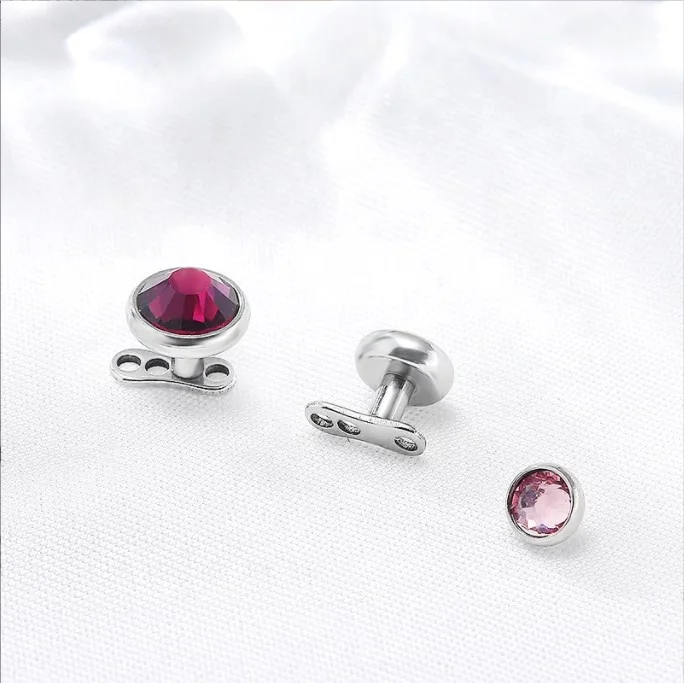
Dermal anchors and microdermals are small products, but they are not small decisions for professional buyers. A studio, distributor, or private-label brand needs to think beyond the decorative top. The base design, threading, material, finishing, packaging, and reorder consistency all affect whether the range is practical to sell and easy to restock. For dermal anchor wholesale sourcing, the strongest buying plan is usually narrow, technical, and repeatable.
PSS works with piercing studios and wholesale body jewelry buyers that need factory-backed supply across titanium, 316L, waterproof 316L, premium materials, and OEM/ODM development. This guide looks at dermal anchors from the purchasing side: what to include, what to verify, and how to keep the range commercially useful without overcomplicating inventory.
Clarify the Product Role First
Dermal anchors can sit in different positions inside a B2B catalog. For a piercing studio, they may be part of a professional service range where the buyer values clean materials, consistent components, and controlled sizing. For a distributor, they may be a compact category with multiple tops, finishes, and price tiers. For a private-label buyer, microdermals may support a curated collection with branded packaging and repeatable visual identity.
Before ordering, define whether the range is meant to be a core replenishment line, a premium edit, a seasonal decorative selection, or an OEM/ODM development project. That decision shapes every later choice: material, top style, thread system, assortment depth, packaging, and reorder quantities.
Compare Titanium and 316L by Channel
For studio-focused buyers, titanium dermal anchor jewelry is often the first category to review. ASTM-F136 titanium supports a professional material story and works well when buyers want a focused range for long-wear jewelry, precise components, and repeat supply. It also aligns naturally with broader ASTM-F136 titanium piercing jewelry assortments such as labrets, barbells, nose rings, and septum clickers.
316L stainless steel can also have a commercial role, especially for distributors and retail-heavy buyers who need wider price coverage and decorative variety. The key is to keep material positioning clear. A buyer may separate titanium microdermals for professional studio supply and 316L dermal anchor jewelry for broader fashion-led collections, instead of mixing materials under one vague product label.
Do Not Treat Tops and Bases as One Decision
Many catalog photos focus on the visible top, but wholesale buyers should review the top and base separately. The base needs consistent dimensions, clean edges, reliable threading or fitting, and a finish that matches the buyer’s quality expectations. The top needs stable decoration, consistent color, accurate stone setting where applicable, and enough design variety to support retail choice.
A practical microdermal range might begin with plain discs, small crystal tops, opal tops, and a few shaped designs. Once reorder data is clear, the buyer can expand into more decorative tops or private-label styling. Starting too wide makes it harder to understand which designs are actually selling and which are simply attractive in supplier photos.
Control Specifications Before Scaling
Dermal anchors require disciplined specification management. Buyers should document gauge, thread type, top diameter, base shape, base size, finish, color, stone type, and packaging format. A small difference in wording can create confusion between teams, especially when multiple staff members handle product uploads, purchase orders, and warehouse receiving.
This is also where SKU logic matters. A distributor may need separate SKUs for titanium bases, 316L bases, crystal tops, opal tops, and full sets. A studio may prefer fewer SKUs but stronger control over the core sizes and finishes it uses most often. The goal is not to carry every option; it is to make reordering simple and reduce avoidable mistakes.
Check Finish, Fit, and Presentation
Quality control for dermal anchors should include close inspection of surface finish, edges, threading, top alignment, plating or color consistency where used, stone placement, and packaging separation. Buyers should also confirm that product photos, titles, and descriptions match the actual material and component type. This protects both conversion and customer trust.
The same principles apply across body jewelry, but dermal anchors deserve extra attention because components are small and easy to mislabel. Buyers can use the PSS guide to quality control points for wholesale piercing jewelry orders as a checklist framework before confirming bulk production or repeat restock.
Plan the Assortment Around Real Demand
A dermal anchor assortment does not need to be large to be useful. For many professional buyers, a compact range with reliable base options and a limited number of top styles performs better than a large collection with inconsistent reorder availability. Start with the materials and styles that match your channel, then use sales data to expand carefully.
If the buyer is building a broader studio collection, dermal anchors should sit beside related titanium categories such as titanium threadless labrets, barbells, clickers, and nose rings. The recent article on core piercing jewelry assortment planning is helpful for deciding how microdermals fit into a larger purchasing structure.
When OEM or ODM Makes Sense
OEM or ODM development is useful when dermal anchors are part of a branded range, exclusive decorative theme, coordinated packaging system, or distributor-specific collection. ODM can help buyers select from factory-developed styles and adjust details such as finish, color, or packaging. OEM is better when the buyer has a clearer product concept and needs sampling before bulk production.
For most buyers, it is smarter to prove the commercial range first, then move selected best sellers into custom development. PSS can help buyers connect dermal anchor sourcing with OEM piercing jewelry manufacturing, private-label packaging, and repeat wholesale supply, without forcing the first order to become overly complex.
A Better Dermal Anchor Buying Plan
The best dermal anchor wholesale program is not the one with the longest product list. It is the one with clear material tiers, reliable base and top specifications, clean finish quality, consistent SKU naming, and a reorder path that buyers can repeat with confidence. That is what turns microdermals from a scattered catalog item into a controlled product category.
If you are planning dermal anchors or microdermals for a studio, distributor catalog, or private-label collection, contact PSS with your target material, top styles, base requirements, packaging needs, and expected order rhythm. We can help organize a practical sourcing plan across titanium, 316L, OEM/ODM, and long-term restocking.
