

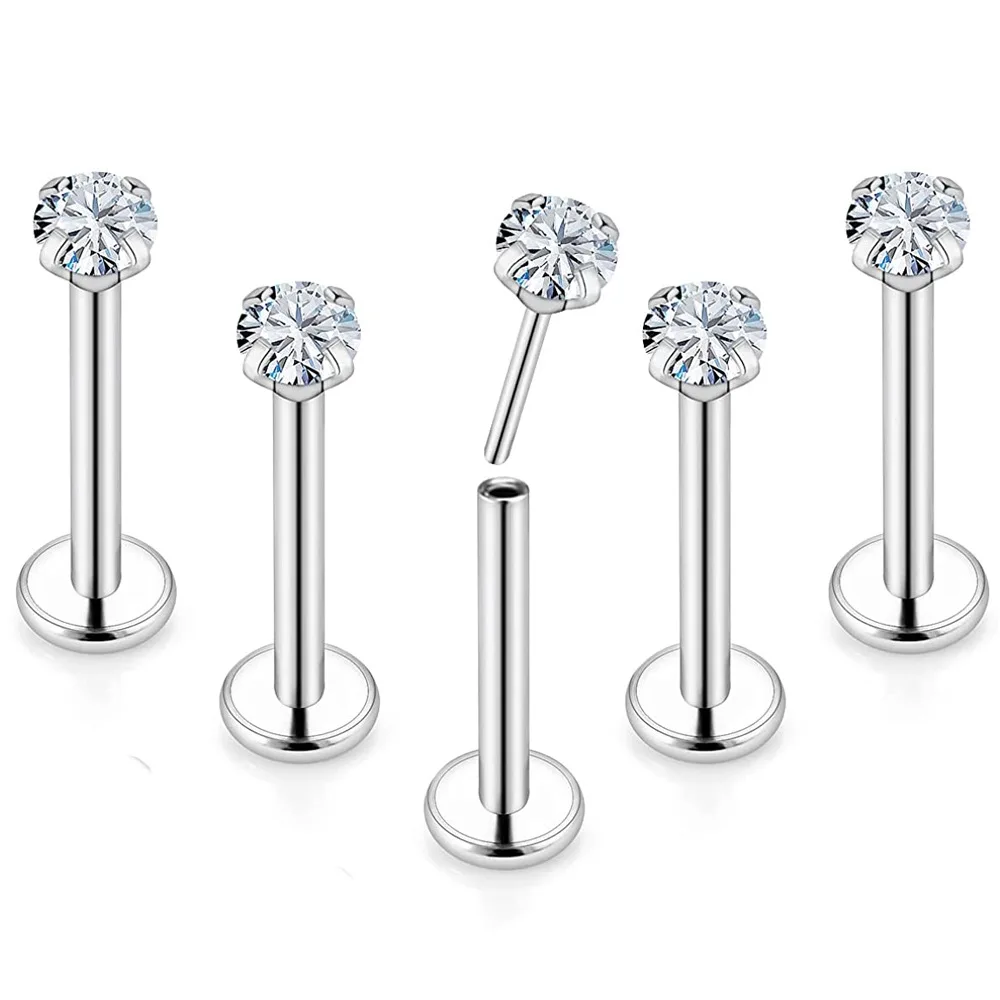
Threadless labrets are one of the most useful products a professional body jewelry buyer can add to a titanium line. They are compact, easy to merchandise, suitable for multiple piercing placements, and simple to expand with different tops, stones, and finishes. For studios, distributors, and private-label brands, the real value is not only in a good-looking first order. A strong threadless labret program should be reorderable, predictable, and easy for customers to understand.
At PSS, many B2B buyers use titanium threadless labrets as a core assortment because the style connects material trust, broad placement use, and long-term replenishment. This guide explains what makes a threadless labret range worth reordering, and what wholesale buyers should check before building the category at scale.
Reorderability Starts With a Clear Product System
A threadless labret collection becomes easier to sell when the buyer can organize it clearly. That usually means separating the program by gauge, post length, disk size, top style, stone size, and finish. If every SKU feels like a one-off item, studios have to spend more time explaining the range and distributors have to spend more time managing stock. A clean system makes repeat purchasing simpler.
For wholesale buyers, the practical starting point is usually a small group of dependable specifications. Common gauges and lengths can support the base range, while decorative tops create variety without making the whole catalog difficult to manage. This is why many buyers prefer a supplier that can provide both simple titanium posts and decorative tops in a stable specification structure.
Material Positioning Matters to Professional Buyers
Threadless labrets are often worn for long periods, so material positioning matters. Buyers serving professional studios usually want a strong titanium story because it supports a more serious product offer than generic fashion jewelry. When the assortment is built around ASTM-F136 titanium piercing jewelry, the sales conversation can focus on material grade, finishing consistency, and professional supply rather than only price.
That does not mean every buyer needs to stock only titanium. A complete wholesale catalog may also include 316L piercing jewelry for broader commercial styles and price-sensitive channels. The key is to define the role of each material. Titanium threadless labrets can serve as the professional core, while 316L ranges can support wider fashion demand.
The Pin Fit Has to Be Consistent
Threadless jewelry depends on fit. If the pin is too loose, the buyer may receive complaints. If it is too tight or inconsistent, studio staff spend more time checking and adjusting pieces before sale. For B2B buyers, this is not a small detail. It directly affects confidence in repeat orders.
Before committing to a larger order, buyers should check how the supplier controls the pin, post, and top fit across batches. Ask for samples from the intended product group, not just a random best-looking sample. Test several pieces, compare the tension, and confirm whether future bulk production will follow the same construction. This is especially important for distributors selling to multiple studios, because one inconsistent batch can create many small service issues.
Build the Assortment Around Real Studio Demand
A reorderable assortment should not rely only on novelty designs. Studios need jewelry that can sell repeatedly for helix, flat, conch, tragus, lip, and other common placements. Simple crystal tops, bezel settings, prong settings, small shapes, and clean polished disks often work as everyday sellers. More decorative designs can add margin and personality, but they should be built on top of a stable base.
When planning a titanium threadless labret wholesale order, buyers should think in layers. The first layer is core posts and basic tops. The second layer is commercially proven decorative tops. The third layer is seasonal or brand-specific designs. This structure keeps the range easy to replenish while still leaving room for newness.
Photos, Specs, and Packaging Help the Product Sell
For distributors and private-label brands, the supplier’s support materials can make a real difference. Clear product photos, exact specifications, material descriptions, and organized SKU information help buyers build product pages and catalogs faster. If the supplier can also support packaging discussion, barcode planning, or grouped assortments, the buyer can move from sample approval to market launch with less friction.
This is where OEM and ODM support becomes valuable. A buyer may start with standard styles, then request specific stone colors, logo packaging, display cards, or a more focused product bundle for studios. The supplier should be able to discuss what is practical for production and what may create avoidable cost or consistency problems. For custom projects, the goal is not simply to make something different. The goal is to make a product range that can be repeated.
Compare Suppliers by Repeat Supply, Not Only MOQ
Low MOQ can be useful when testing a new supplier or launching a small collection. But for a buyer who plans to grow, repeat supply is more important than the lowest trial quantity. Ask whether the supplier can maintain the same post lengths, top styles, finish quality, and packaging direction when the second and third orders arrive. Also ask how they handle discontinued styles, product updates, and replacement planning.
A good supplier should help buyers avoid a catalog full of products that cannot be replenished. This matters for studios that want consistent display trays, distributors that need predictable stock, and private-label brands that want customers to reorder familiar styles. A threadless labret range is strongest when the buyer can keep the best sellers available and add new designs without rebuilding the whole category each season.
When Threadless Labrets Should Sit Beside Other Titanium Styles
Threadless labrets are often the anchor, but they become more effective when they sit beside related titanium styles. Buyers can connect labrets with titanium nose rings, cartilage earrings, barbells, and clickers to create a fuller professional collection. Internal category structure also helps online stores and wholesale catalogs guide customers from one familiar product type to the next.
If you are still deciding how to position titanium against other materials, our guide to titanium vs 316L piercing jewelry is a useful companion piece. Buyers building a broader professional line can also review the earlier titanium labret wholesale collection guide before finalizing the first assortment.
Make the First Order Easy to Learn From
The best first order is not always the largest one. It is the order that teaches the buyer which specifications, top designs, and price points deserve repeat investment. Track which gauges and lengths move fastest, which tops studios reorder, and which designs create too much complexity. Then use that information to refine the next shipment.
PSS supplies titanium threadless labrets and related body jewelry for studios, distributors, wholesale buyers, and private-label projects. If you are planning a reorderable labret range, browse our wholesale piercing jewelry collections or contact us to discuss material options, assortment planning, and OEM/ODM support.
