

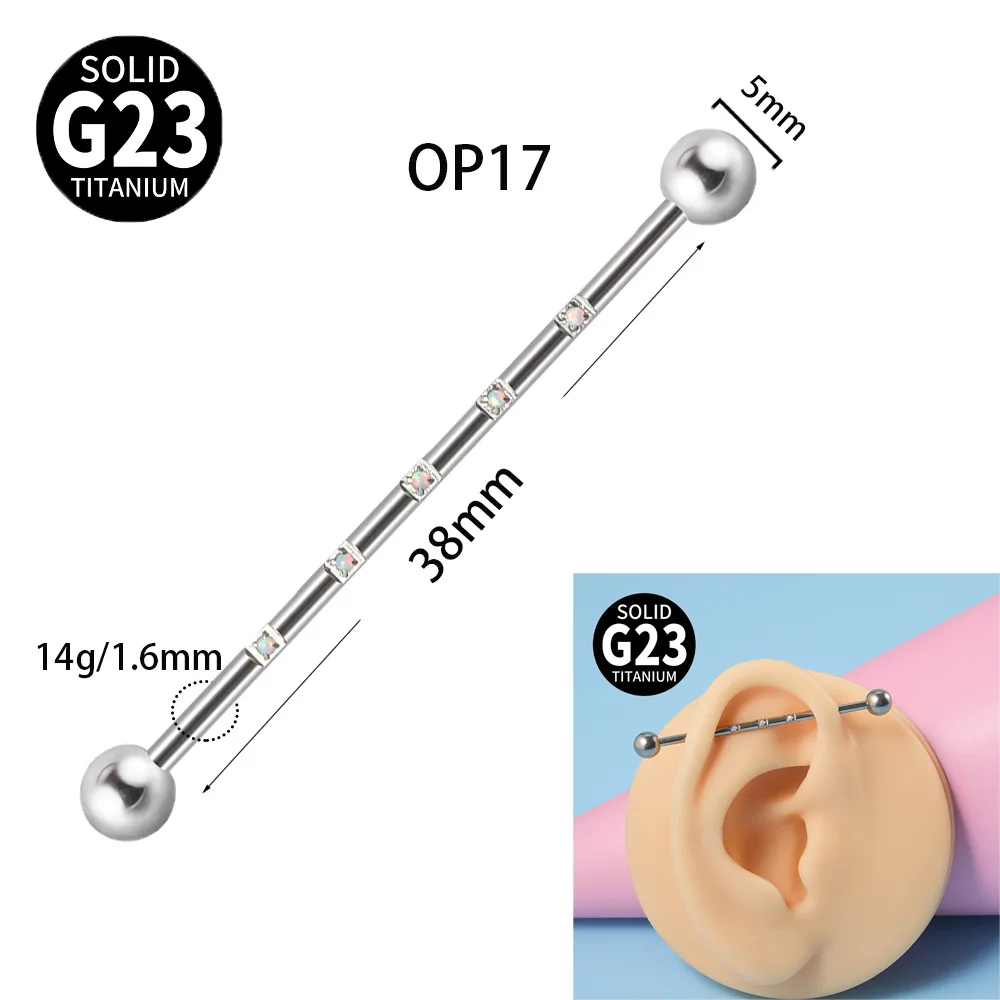
For many piercing studios and wholesale buyers, barbells are not an accessory category to fill at the end of an order. They are part of the everyday range that keeps trays stocked, clients served, and repeat purchasing predictable. Titanium barbells and industrial barbells sit in a useful middle ground: they are technical enough to require good specifications, but commercial enough to generate steady reorder demand when the assortment is planned well.
At PSS, we usually encourage B2B buyers to look at barbell planning as a system rather than a single SKU decision. A distributor may need breadth for catalog coverage, while a studio may need fewer styles with more reliable replenishment. A private-label buyer may care most about finish, packaging, and consistent sample approval. The best wholesale range balances all three perspectives before a bulk order is placed.
Start with the role each barbell plays in the range
A basic titanium barbell, a curved barbell, a bar-and-ball program, and a decorative industrial barbell do not solve the same buying problem. Standard pieces support professional service and repeat replacement demand. Decorative industrial barbells support retail display, style rotation, and higher visual impact. Before comparing prices, buyers should decide whether the range is built for studio basics, premium retail, online assortment depth, or private-label development.
For a core titanium program, the starting point is usually a focused set of clean, reorderable pieces linked to the wider ASTM-F136 titanium piercing jewelry category. Buyers can then extend into the dedicated titanium industrial barbell subcategory when they want longer bar formats, decorative center elements, or more visible ear styling options.
Choose materials by position, not by habit
Titanium barbells are often selected for premium professional assortments because they are lightweight, corrosion resistant, and well aligned with the expectations of serious piercing buyers. ASTM-F136 titanium is especially important when a buyer wants to position the line as a higher-trust option for studios and long-wear jewelry assortments. That does not mean every wholesale program must be titanium only. Many distributors still keep 316L piercing jewelry in the commercial tier because it supports broader price coverage and larger style counts.
The practical question is where each material belongs. Titanium should usually sit in the professional core, premium studio, and higher-value industrial barbell range. 316L can support entry commercial styles, fashion-led designs, and wider bulk assortment where the buyer needs price flexibility. If the range includes plated or color-finished pieces, the buyer should ask how the finish is applied and whether repeat batches can match the approved sample closely enough for branded sales.
Specifications make or break reorderability
Barbells look simple in product photos, but buyers know the details matter. Gauge, wearable length, ball size, threading style, polish, and end fit all affect whether the product can be sold confidently and reordered without confusion. Industrial barbells add another layer because length and decoration placement must feel intentional. A beautiful center design is not useful if the bar length, balance, or end construction does not fit the way studios and customers actually buy.
For wholesale planning, create a simple specification grid before requesting a quotation. Include gauge options, length range, ball or end size, internal or external threading, color choices, stone or decoration type, packaging requirement, and target use case. This helps the supplier quote more accurately and reduces the chance that a sample looks good but cannot be turned into a repeatable bulk SKU.
Do not overbuild the first order
One common mistake is launching too many barbell styles at once. Industrial barbells can be visually tempting because there are many shapes, chains, CZ settings, and decorative themes available. But an overloaded first order can create slow-moving inventory and unclear reorder signals. For a first titanium industrial barbell range, a cleaner structure usually works better: several plain or minimal pieces, a few polished decorative styles, and one or two statement designs for retail display.
Studios may prefer a tight range with dependable replenishment. Distributors may need more catalog depth, but they still benefit from separating always-in-stock basics from seasonal or test designs. Private-label brands should also think about how each SKU photographs, how it fits the packaging set, and whether it supports the brand’s long-term visual language rather than only one short product launch.
Use internal product clusters to support SEO and buying journeys
From a website merchandising perspective, titanium barbells should not live in isolation. They should connect naturally with other titanium categories that buyers compare during assortment planning, such as titanium threadless labrets, titanium nose rings, septum clickers, and belly rings. A buyer building a professional studio range rarely buys one body jewelry format alone. They are usually comparing how the full titanium program will sit together in trays, product pages, and reorder lists.
That is also why educational content matters. A barbell buyer may first read a general material guide such as Titanium vs 316L Piercing Jewelry, then move into product-specific planning, then request samples or a quotation. Clear internal links shorten that journey and help the buyer understand where each material and format fits.
Quality control should be defined before production
Barbells deserve a practical QC checklist. Buyers should confirm surface finish, thread smoothness, end alignment, stone setting stability where applicable, color consistency, and packaging condition. For industrial barbells, check whether decorative elements are centered and whether both ends fasten cleanly. If the order includes multiple sizes, the supplier should separate and label them clearly to avoid receiving a mixed bulk shipment that creates extra sorting work.
For larger B2B orders, it is helpful to agree on inspection points before production starts. The goal is not to create unnecessary paperwork. It is to make sure the approved standard is clear enough that repeat orders are less risky. Buyers who are building long-term supply should connect this process with broader piercing jewelry quality control expectations across the full catalog.
Plan samples around real buying decisions
A good sample request should answer commercial questions, not only visual ones. Does the plain titanium barbell feel like a dependable basic? Does the industrial barbell design photograph well enough for product pages? Are the ends easy to understand for studio staff and retail customers? Can the same design support different finishes or lengths without creating too many low-volume variants?
When buyers ask for samples, they should include the intended market, preferred material tier, approximate order volume, packaging needs, and whether OEM or ODM adjustment is expected. This lets the factory recommend a more realistic path instead of quoting a generic item that may not fit the buyer’s business model.
Build the range for replenishment, not just launch
The strongest titanium barbell programs are easy to reorder. They have clear SKU names, stable specifications, repeatable finishes, and a supplier that understands how the line should grow. A launch order may test several styles, but the reorder program should quickly identify core sellers, slow movers, and styles that need material or finish adjustment.
For studios, this means fewer stockouts and cleaner counter presentation. For distributors, it means better catalog discipline and less dead inventory. For private-label buyers, it means a line that can be developed season by season without losing consistency. If you are planning a titanium barbell or industrial barbell range, PSS can help review material options, sample direction, OEM/ODM details, and long-term restock planning. You can contact the PSS team with your target market, material preference, and estimated order plan to start a focused quotation discussion.
