Blog

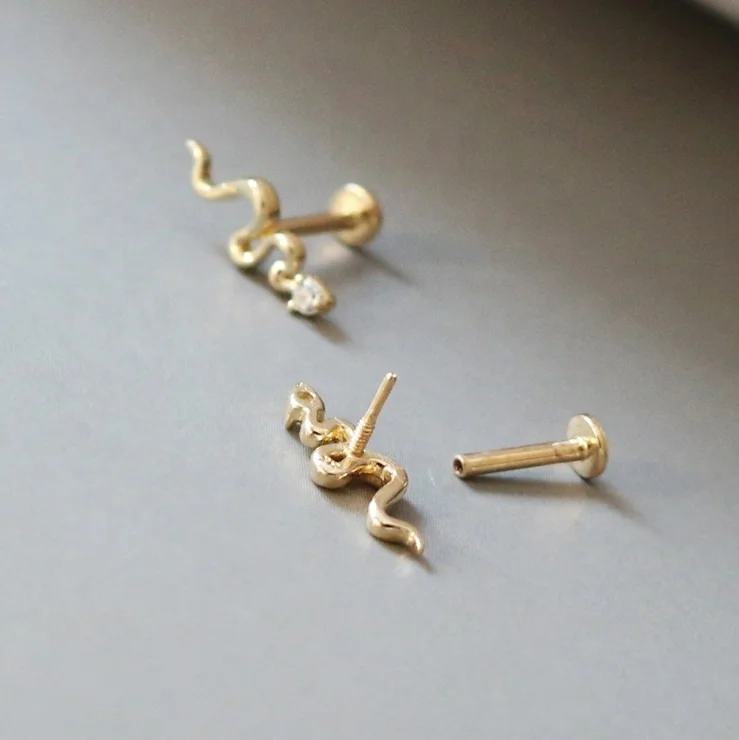
For many professional piercing studios and wholesale buyers, 14K solid gold piercing jewelry sits in a different commercial lane from everyday stainless steel or titanium basics. It is not only a material upgrade. It changes how buyers plan display cases, explain value, control inventory risk, and build a premium collection that can be reordered instead of treated as a one-time trend purchase.
At Piercing Studio Supply, we see 14K gold as a strategic category for buyers who already understand their core assortment. A studio, distributor, or private-label brand usually gets the best result when gold is planned around repeatable silhouettes, clear specifications, and a small group of styles that match real customer behavior. This guide explains how B2B buyers can position 14K solid gold piercing jewelry without overextending stock or turning the range into scattered luxury pieces.
Why 14K gold belongs in a professional assortment
14K solid gold appeals to buyers because it gives the jewelry counter a higher-ticket option with a familiar premium signal. In studios, it can support upgrades for clients who want a more refined look after they have already decided to buy quality jewelry. For distributors and online wholesalers, it can create a margin layer above broad 316L and titanium categories while still staying practical enough for repeat sales.
The key is to position gold as a curated premium range rather than a replacement for every material. Many buyers continue to use ASTM-F136 titanium piercing jewelry for professional core pieces and 316L piercing jewelry for broader commercial assortments. 14K gold works best when it gives the buyer a clear premium step: smaller quantities, more selective designs, stronger presentation, and careful reorder planning.
Start with wear locations that sell consistently
Before adding complex designs, buyers should decide which wear locations deserve 14K gold depth. Flat back labrets, cartilage earrings, nose studs, hoops, and selected navel designs are often easier to build into a premium range because they are familiar to customers and can be displayed cleanly. A good first collection does not need dozens of experimental shapes. It needs enough dependable options that a studio can recommend them confidently and a distributor can restock without rewriting the catalog every month.
For studio-focused buyers, flat back styles are especially useful because they fit a wide range of ear styling needs. Simple bezels, tiny charms, stars, flowers, hearts, and polished ball ends can cover everyday premium demand. More expressive designs can be added later, but the base assortment should be easy to understand from a product photo, a display tray, or a line sheet.
Separate solid gold from gold-tone categories
One of the most important B2B merchandising decisions is keeping 14K solid gold clearly separated from gold-plated, PVD-coated, or gold-tone stainless steel styles. Each category can have a place, but mixing them without clear naming creates sales friction. Buyers should label material, color, plating or coating information, gauge, post length, ball size, stone setting, and thread or push-fit system in a consistent format.
This matters for conversion and after-sales communication. A distributor selling to retailers needs product data that can move cleanly into listings. A private-label brand needs packaging and SKU names that do not confuse premium shoppers. A studio needs staff to explain why one gold-colored piece is a fashion price point while another is solid 14K gold. Clear separation protects trust and reduces avoidable questions from downstream buyers.
Plan the price ladder before choosing designs
Premium jewelry sells better when the price ladder makes sense. If every piece sits at the top end, buyers may hesitate to test the category. If too many pieces are entry-level, the collection may not feel special. A balanced 14K gold assortment usually includes a small set of simple daily-wear pieces, a middle tier with stones or shaped tops, and a few highlight designs that help the display feel premium.
This price structure is useful for wholesale buyers because it supports different reorder speeds. Simple gold flat backs and small studs may become steady sellers. More decorative pieces may move slower but improve presentation and help buyers offer upgrades. Planning both roles from the start makes inventory easier to manage.
Use specs to lower purchasing risk
Gold jewelry requires tighter specification control than low-cost fashion ranges. Buyers should define gauge, wearable length, backing style, stone size, color, setting method, polish standard, and packaging needs before placing a bulk order. For private-label projects, the supplier should also understand logo use, carding, barcode labels, pouch or box requirements, and photography expectations.
This is where an OEM or ODM conversation becomes valuable. If a buyer wants a custom top, adjusted size, alternate stone color, or branded packaging, the inquiry should include reference images, target material, expected order quantity, preferred delivery rhythm, and any restrictions for the sales market. Buyers planning private-label or exclusive ranges can start that conversation through the PSS contact page with a simple product brief and target collection size.
Merchandise 14K gold alongside supporting materials
Gold performs better when buyers place it inside a complete material story. A studio might present titanium as the reliable professional base, waterproof 316L as an accessible fashion range, 925 silver as giftable jewelry, and 14K gold as the premium upgrade. This gives customers clear choices without forcing every product into the same role.
For distributors, the same logic helps category pages and sales sheets. A buyer can compare gold styles with waterproof 316L piercing jewelry for trend-driven assortments or with 925 silver piercing jewelry for giftable and retail-focused ranges. Internal category structure matters because B2B customers often browse by material first, then by wear location and design.
Do not overbuild the first order
The biggest mistake with premium categories is treating the first order like a final collection. A better approach is to test a compact gold range with clear logic: several dependable flat backs, a few nose or cartilage styles, one or two small hoop options, and a limited number of statement pieces. Buyers can then track which shapes earn repeat orders, which sizes sell fastest, and which styles look good in photos but do not convert at the counter.
This test-and-expand approach is especially useful for European and North American buyers who need stable supply but also want fresh designs. Once the first reorder data is available, it becomes easier to decide whether to deepen bestsellers, add stone variations, create branded packaging, or develop exclusive shapes.
What to ask a gold piercing jewelry supplier
When evaluating a gold piercing jewelry supplier, buyers should ask for clear material descriptions, available gauges and lengths, product photos, MOQ by style or collection, sample options, lead time, packaging support, and reorder process. It is also useful to ask whether the supplier can support mixed-material sourcing, because most serious B2B buyers do not purchase gold alone. They often need titanium, stainless steel, silver, and gold ranges to arrive from one coordinated sourcing plan.
Buyers can browse the current PSS range from the wholesale piercing jewelry shop or compare premium gold styles directly in the 14K solid gold jewelry category. For studios, distributors, or private-label brands planning a new premium collection, a short inquiry with target wear locations, preferred styles, and expected order volume is usually enough to start a practical quotation discussion.
Bottom line for wholesale buyers
14K solid gold piercing jewelry can be a strong B2B category when it is planned with restraint. The best results usually come from clear material positioning, repeatable core styles, professional product data, and a price ladder that gives customers a natural premium upgrade. Instead of chasing too many designs at once, buyers should build a focused gold range that can be photographed, explained, sampled, reordered, and expanded over time.
If you are building a premium piercing jewelry line for a studio, distribution catalog, or private-label brand, PSS can help review the material mix and develop a practical 14K gold assortment alongside titanium, 316L, and silver categories. Send your target style list through the contact page and we will help turn it into a sourcing plan.

Leave a Reply Cancel reply
Recent Comments
- Titanium Septum Clickers Wholesale Buyer Guide | PSS on Titanium vs 316L Piercing Jewelry: How Professional Buyers Choose
- Core Piercing Jewelry Assortment Planning for Studios | PSS on ODM Body Jewelry Supply: What Makes a Factory Partner Useful
- Core Piercing Jewelry Assortment Planning for Studios | PSS on How to Build a Reliable Titanium Labret Collection for Studios
One thought on “14K Solid Gold Piercing Jewelry: How to Position Premium Styles”