
Waterproof 316L piercing jewelry has become a useful commercial category for studios, distributors, and private-label buyers who need attractive everyday styles at a price point that can move in volume. For many buyers, the appeal is clear: 316L stainless steel supports broad assortments, modern plating finishes, fast-moving fashion details, and accessible reorder quantities. But the word “waterproof” should still be treated as a purchasing claim that needs to be checked carefully.
At PSS, we see waterproof 316L as a practical range for buyers who want durable daily-wear styles without positioning every SKU as premium implant-grade titanium or solid gold. The opportunity is strongest when the buyer understands where 316L fits, what the finish can realistically do, and how to evaluate samples before placing a larger order.
What “waterproof 316L” usually means in wholesale body jewelry
In B2B sourcing, waterproof 316L piercing jewelry normally refers to stainless steel jewelry designed with plating, polishing, and finishing choices that help the surface hold up better against daily moisture exposure. It does not mean the jewelry is indestructible, maintenance-free, or suitable for every piercing situation. For responsible product positioning, buyers should use it as a durability and lifestyle feature, not as a medical or healing promise.
This distinction matters for professional buyers. Studios and distributors need product language that is attractive but defensible. If a supplier can only say “waterproof” without explaining base material, plating method, finishing consistency, color options, or care expectations, the claim is too thin for serious purchasing. A stronger supplier should be able to discuss what the product is made from, which styles are better suited to waterproof positioning, and how repeat batches are controlled.
Check the base material before comparing price
The first sourcing checkpoint is the base material. 316L stainless steel remains popular because it can support a large assortment of belly rings, hoops, labrets, barbells, clickers, and decorative fashion pieces at a competitive wholesale cost. Buyers who need broad retail coverage can review the main 316L piercing jewelry category to understand how wide the material range can be.
For waterproof-specific assortments, it is better to compare products inside a dedicated range, such as 316L waterproof piercing jewelry, instead of mixing every stainless steel item into one quote sheet. This makes sample review easier. Buyers can check whether the finishing standard, color depth, surface smoothness, and product photography are consistent across the group.
Look closely at plating and color consistency
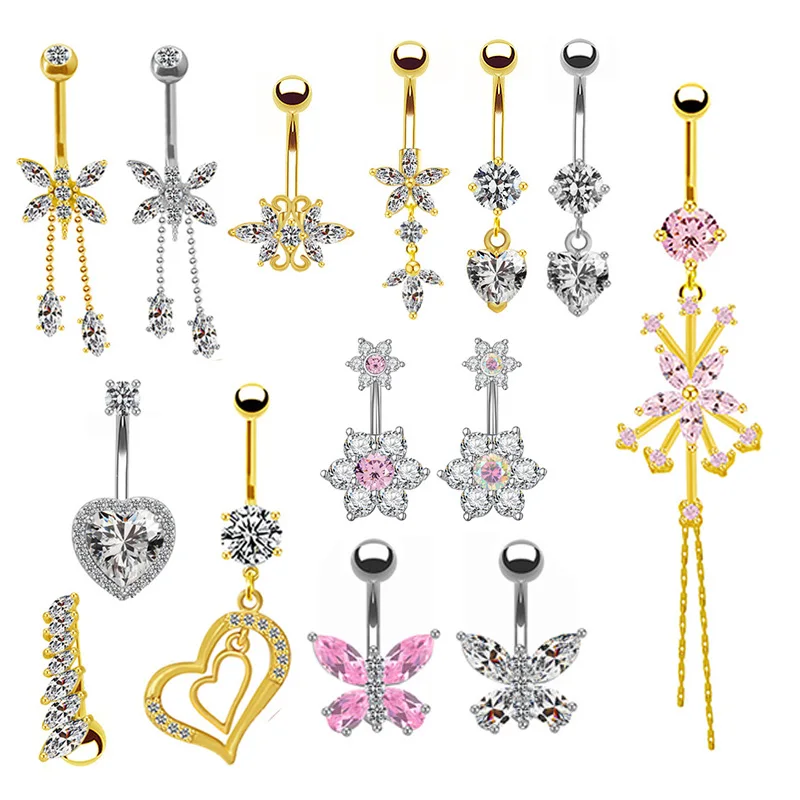
Many waterproof 316L best sellers use gold-tone, silver-tone, or polished steel finishes. For commercial ranges, the important issue is not only whether the first sample looks good. The larger question is whether color and finish can be repeated across future replenishment orders. A distributor may place a small test order first, then reorder quickly when a style sells. If the second batch has a different gold tone, softer polish, or inconsistent stone setting, the buyer inherits the customer-service problem.
Before ordering in bulk, ask for real product photos, production sample photos, or a small mixed sample set. Compare the finish under neutral light. Check areas around hinges, threaded parts, curved bars, bezels, and stone settings. These areas often reveal whether the finishing process is controlled or only attractive in front-facing catalog photos.
Decide where waterproof 316L fits in your assortment
Waterproof 316L should not replace every other material category. It works best as part of a balanced range. For professional piercing studios, ASTM-F136 titanium remains important for higher-trust long-wear jewelry and fresh-piercing discussions. Buyers building that side of the assortment can connect waterproof 316L planning with the ASTM-F136 titanium piercing jewelry range.
For retailers, online shops, and distributors, waterproof 316L often performs well as a daily-wear, style-rich, accessible category. Belly rings, decorative hoops, simple labrets, and seasonal shapes can be tested in wider designs without tying up the same budget required for solid gold or more complex titanium development. This makes it useful for buyers who want frequent product refreshes, trend testing, and replenishment SKUs.
Build the order around repeatable styles, not only new designs
A common mistake is to treat waterproof 316L as a purely trend-driven category. New shapes and decorative details matter, but wholesale profitability usually comes from repeatable styles. Buyers should separate the range into three groups: core daily sellers, seasonal fashion styles, and test designs. Core sellers need stable size options, consistent color, predictable packaging, and long-term availability. Test designs can be ordered in smaller quantities until sell-through is clearer.
This is where a supplier’s inventory planning and manufacturing support become more valuable than a very large catalog. A buyer does not need thousands of random options. They need enough style variety to test the market, plus enough production discipline to reorder the winners. Reviewing the full PSS shop can help buyers compare how waterproof 316L sits beside titanium, 14K gold, silver, and other body jewelry categories.
Sample review points for studios and distributors
When samples arrive, inspect them like a buyer, not like a casual shopper. Check surface smoothness, visible polishing marks, plating tone, stone alignment, closure movement, thread or push-fit feel, and packaging condition. For belly rings and curved barbells, look at the smoothness around the ball ends and decorative settings. For hoops and clickers, open and close the hinge several times to check whether it feels stable and aligned.
Studios should also decide how staff will explain the material to clients. Waterproof 316L can be positioned as an accessible everyday jewelry option, while titanium can remain the preferred category for clients who specifically ask for implant-grade material. A useful comparison article is Titanium vs 316L Piercing Jewelry: How Professional Buyers Choose, which helps teams frame the two materials without overselling either one.
Ask suppliers the right questions before bulk ordering
Before confirming a larger waterproof 316L order, buyers should ask practical questions. Which styles are currently stable for repeat production? Which finishes have the most consistent reorder history? Can mixed designs be combined under one MOQ? Are product photos, dimensions, and material descriptions available for online listings? Can the supplier support OEM or private-label packaging if a buyer wants to build a branded range?
The answers help separate a short-term trading supplier from a more useful long-term partner. For distributors and private-label brands, this difference is important. You are not only buying a product; you are building a category that must be photographed, listed, stocked, reordered, and explained to customers. A supplier that understands those steps can reduce friction after the first invoice.
How PSS supports waterproof 316L sourcing
PSS supports B2B buyers with waterproof 316L, standard 316L, titanium, gold, silver, and OEM / ODM piercing jewelry supply. For waterproof 316L projects, the most productive approach is to start with a focused assortment: choose core styles, add a smaller group of trend designs, review samples carefully, and keep successful SKUs easy to reorder.
If you are planning a waterproof 316L body jewelry range for a studio chain, distributor catalog, online shop, or private-label project, send your target styles, quantity range, material preferences, and packaging needs through the PSS contact page. Our team can help you review practical options and build a quote around styles that make sense for repeat wholesale supply.
