
316L stainless steel is sometimes treated as a basic category, but for wholesale body jewelry buyers it remains one of the most commercially useful materials in the catalog. Studios, distributors, and private-label brands may use titanium to build a professional premium tier, yet many still need 316L piercing jewelry for accessible price points, broader style testing, and repeatable volume programs.
At PSS, we see 316L as a practical part of a balanced B2B assortment, not a substitute for every material and not a category to ignore. The opportunity is to use it intelligently: select the right styles, define the quality expectations clearly, and position 316L alongside titanium, waterproof 316L, gold, and silver in a way that helps buyers sell with confidence.
Why 316L Still Has Strong Buyer Intent
Searches for 316L piercing jewelry usually come from buyers who are already comparing suppliers, pricing, catalog depth, and order flexibility. They are not only looking for a definition of stainless steel. They want to know whether a supplier can support the designs, finishes, packaging, and repeat orders that make sense for their business.
That makes 316L a high-value SEO and sales topic for wholesale body jewelry suppliers. The material serves buyers who need a wider commercial range than titanium alone can provide. For a distributor, 316L can fill everyday retail demand across belly rings, nose jewelry, barbells, hoops, cartilage earrings, tongue rings, and decorative clickers. For a studio, it may support selected retail pieces or lower-entry options where local rules and studio standards allow.
Where 316L Fits in a Professional Assortment
The strongest wholesale catalogs usually have a material ladder. ASTM-F136 titanium piercing jewelry can sit at the professional core, especially for buyers focused on long-wear pieces and a cleaner material story. 316L stainless steel can sit beside it as the broader commercial range, giving the buyer more room to test fashion shapes, colors, charms, seasonal motifs, and price-sensitive SKUs.
This structure is useful because different customers buy for different reasons. A professional studio owner may want titanium labrets and nose rings as core inventory, then add a small 316L decorative range for display. A distributor may need deeper 316L stock to serve retailers that move volume. A private-label brand may use 316L to test a new visual direction before investing in premium materials or custom molds.
The key is to avoid presenting every material as equal. Buyers should understand what each tier is meant to do. Titanium supports a premium professional position. 316L supports style breadth and commercial accessibility. 14K solid gold piercing jewelry and 925 silver piercing jewelry can be used for higher-ticket or giftable collections. A clear material ladder makes product pages, sales conversations, and reorders easier.
What Buyers Should Check Before Ordering 316L in Bulk
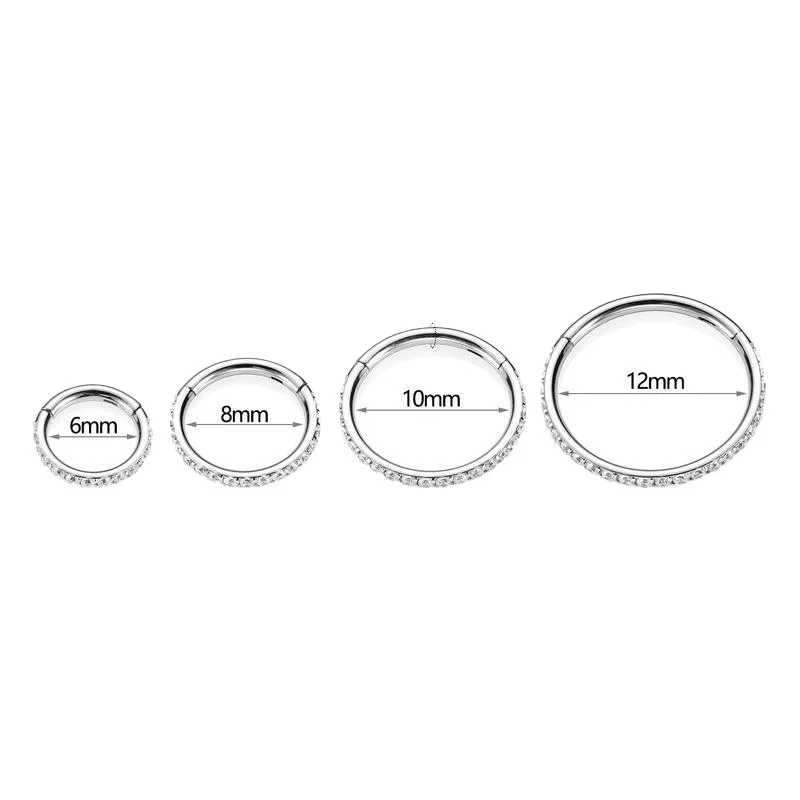
316L is not automatically a strong wholesale product just because the material name is familiar. Buyers should still evaluate surface finish, polish quality, stone setting, color consistency, welds or joints, threaded parts, hinge movement, wearable length, gauge accuracy, and packaging. For decorative pieces, check whether small charms or settings feel secure enough for the intended sales channel.
For plated, PVD, or color-finished 316L pieces, buyers should pay extra attention to finish uniformity between batches. A gold-tone belly ring or colorful clicker may sell well in the first shipment, but the value drops quickly if the second shipment has a noticeably different color tone. Clear sample approval, product photos, and SKU-level specifications reduce this risk before a larger order is placed.
Buyers should also ask which designs are stable for repeat supply. Some styles are better treated as seasonal tests, while others can become long-term basics. A good supplier should help separate reorderable 316L products from trend-led pieces so the buyer does not build a catalog around items that cannot be reliably replenished.
The Role of Waterproof 316L
Waterproof 316L piercing jewelry deserves its own sourcing conversation because buyers often use it as a stronger selling angle for fashion-led styles. The term can help with retail presentation, but professional buyers should still ask practical questions: what finish process is used, what care guidance should be provided, how consistent is the color, and which styles are suitable for repeat production?
In a wholesale assortment, waterproof 316L works best when it is organized clearly rather than mixed randomly with standard 316L. A distributor can create a dedicated waterproof finish range. A studio can select a smaller number of styles that are easy to explain. A private-label buyer can use it for branded collections where color, packaging, and photography need to look consistent across SKUs.
How to Plan a 316L Range That Earns Reorders
A practical 316L wholesale range should begin with stable basics and then add controlled variety. Start with proven shapes such as curved barbells, captive or segment rings, clickers, circular barbells, tongue rings, industrial bars, and simple decorative tops. Add style depth through stone shapes, metal colors, charms, and seasonal themes only after the core assortment is clear.
Quantity planning should follow the same logic. Core 316L basics deserve deeper stock because they are easier to reorder. Novelty pieces should be tested in smaller quantities until the buyer sees actual sell-through. Premium-looking 316L styles need better product images and clear finish descriptions because customers compare them visually against gold-tone, titanium, and silver options.
Internal linking also matters for conversion. A buyer reading a 316L guide may want to compare it with titanium vs 316L piercing jewelry, browse the full wholesale piercing jewelry shop, or ask for a customized quote. The article should make those next steps obvious without forcing a hard sales pitch.
Supplier Questions That Reduce Risk
Before placing a bulk 316L order, ask the supplier which SKUs are recommended for long-term replenishment, which finishes are most stable, and whether the same product specifications can be maintained in future batches. Confirm gauge, size, plating or PVD direction, stone setting, packaging, MOQ, lead time, and whether product photos or SKU lists can be prepared for your sales team.
For OEM and private-label buyers, ask whether the supplier can support modified shapes, branded packaging, collection planning, and sample development. The goal is not only to buy a low-cost 316L product. The goal is to build a sellable system that your team can explain, reorder, and expand without unnecessary sourcing friction.
Building a Balanced 316L Program With PSS
316L stainless steel still matters because it solves a real B2B problem: buyers need commercial variety, manageable pricing, and a flexible material tier that can sit beside titanium and premium jewelry. When planned carefully, 316L can support everyday volume, trend testing, private-label development, and long-term replenishment.
If you are building a 316L piercing jewelry wholesale range, contact PSS with your target styles, materials, finish direction, quantities, and packaging needs. We can help organize your inquiry into a clearer sourcing plan for repeat supply.
